

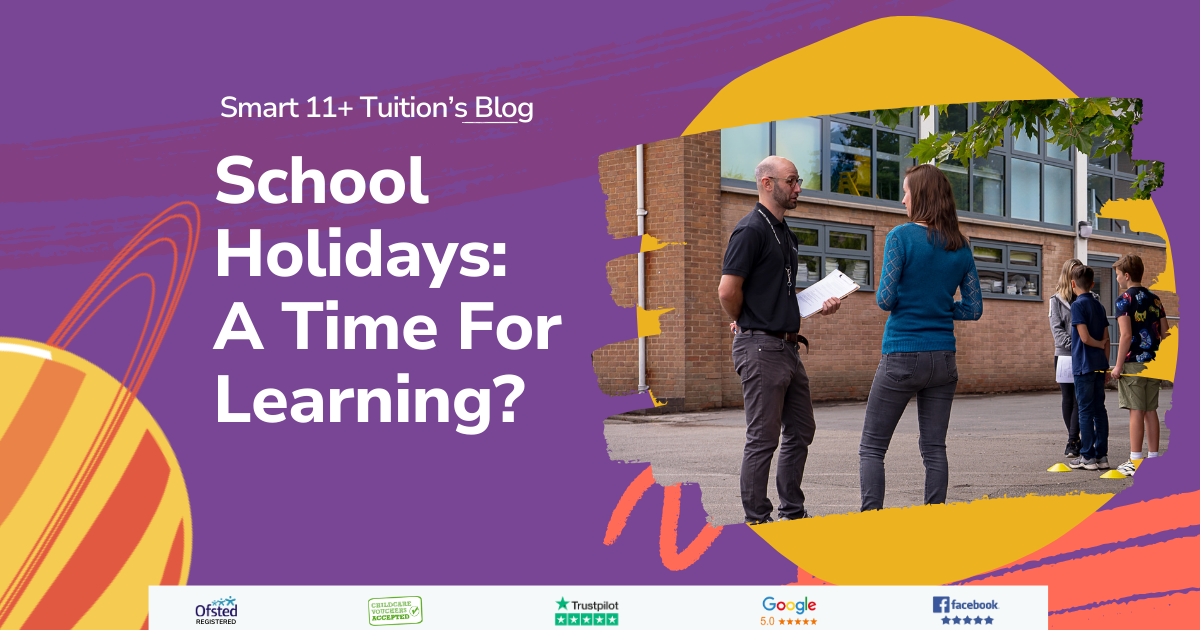
It’s a dilemma faced by many parents. You know that your child has holiday time to relax and unwind, but you also know that after 6 weeks with no active learning, your child is likely to face challenges when they return to school in September. Dealing with this problem during school holidays has been something experts have been examining for years. It has been shown that for the first few weeks after a school holiday, children’s knowledge doesn’t just stop where they left off. Often children’s abilities regress meaning that they have to relearn information and skills.
Should You Schedule Learning During School Holidays?
Modern computing has brought some ingenious ways to help children learn. Apps like Quick Maths provide children with a scheduled number of questions each day. It also provides them with rewards for performing well. Whilst this is used by some schools during term time, it’s something to add to the armoury outside of term. There are equivalent apps for English too. Other than technology, there is also no harm in sitting your child down and practising spelling, handwriting and maths challenges with a pen and paper.
Holiday Clubs and Extra Lessons
Smart 11+ Tuition runs summer holiday courses for children approaching the 11+ exam in September. These children are at a crucial stage in their learning so it is unlikely that other than the summer after Year 5, children would need this extra academic input at the primary school level. The sacrifice of a small amount of playtime will be worth the reward of a place at one of Birmingham’s grammar schools.

Time To Play
Most children only require 30-90 minutes per day to maintain their knowledge until the next academic year starts. It doesn’t have to be sat down at the dining table type learning either. Remember: reading, visiting a museum, using the learning zones, and exploring all have learning qualities worth your child’s time. Engaged play where a child uses their imagination can be a great way to help them expand their vocabulary. Children love making up stories and will often be willing to put on plays for parents and relatives. Encourage their creative side.
Leave Them Alone
Another tip that recently came from a child behavioural expert was to allow a child to play alone. It can be difficult to watch them disappear into the middle distance. Quite a skill for many parents but one which allows your child to problem solve without the feeling of being watched. It can instil a sense of self-sufficiency, and being able to entertain and look after themselves. These skills are invaluable in secondary school and throughout adult life.


